|
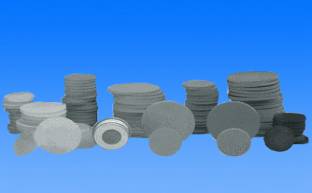
NATURAL RUBBER
(NR) has excellent mechanical and elastic properties and is highly tear resistant. Exposure to sunlight will cause rapid aging. For non-corrosive materials, and acidic and alcoholic solutions this material is adequate.
Although its chemical resistance in general is moderate, short exposure time (e.g. less than 24 hours, as is not unusual in sampling situations) allows for application with many more aggressive chemicals.
ETHYLEN PROPYLEN DIANE MONOMER RUBBER(EPDM)
(EPDM) has good mechanical and elastic properties, good aging and chemical resistance capabilities. A low cost combined with the above features makes this septum a very good choice.
SILICONE RUBBER
(VMQ) has good mechanical and elastic properties. Its prime advantages are excellent heat-resistance and non-oxidizing properties. The complicated fabrication however makes it relatively expensive. Almost no aging occurs, and it is inert to most solvents with the possible exception of the aliphatic type.
PTFE COATED BUTYL
(TCB) the combination of these two materials provide the best choice when considering elasticity properties and chemical and tear resistance. The elasticity and high tear- resistance of the butyl is combined with the almost total chemical inertness of the PTFE (thickness .2mm). The PTFE faces the sample liquid, providing optimal chemical compatibility; the butyl rubber backing provides the seal, only a very large tear would allow contact between the butyl rubber and the sample medium, therefore this septum should only be used with small needle sizes.
PTFE COATED SILICONE
(TCS) incorporates the advantages of silicone and PTFE. The heat-resistance of both materials and the total chemical inertness of the PTFE (thickness 0.2mm) make this septum the best choice when sampling at elevated temperatures. The PTFE faces the sample liquid in the same manner as the PTFE coated butyl septum, therefore attention to the needle sizes should be considered when using this material.
|